Mary Oliver’s Poems and Sacred Trees

This morning, I awakened to a gift. A poem that my eldest child, my daughter, sent to me. It was by Mary Oliver. I read it. I was stunned. And then I was intrigued. So I decided to find some more of Oliver’s work. What followed was no less than a descent down a white-rabbit tunnel into a wonderland of beautiful words and exquisite thought. It seemed I had found a poet who spoke to my soul. It turns out Mary Oliver is also a deep-thinking, dream-driven introvert who loves nature, and she has drilled deeply into the questions of Divinity. God’s nature. God’s revelation in nature.

Unitarian Universalist minister and blogger Fred Hammond described it beautifully, and he quoted author Kathleen McTigue as well:

“Kathleen McTigue writes regarding Oliver’s theology, ‘By that word [theology] I mean not only what her poems reflect of her beliefs about God, but what they reflect about a host of other religious questions: What is holy? Who are we? What are we called to do with our lives? What is death, and how do we understand it when we turn our faces toward its inevitability? These questions matter to all of us. And the answers in Mary Oliver’s poems feel so resonant and so true…’”

These are the questions that have become the very litany of my new existence. I now have an empty nest. It’s just me and my husband and our two dogs knocking around the house. I always believed my calling to be a mom was holy. I know it was. But it’s pretty much over. Now I wonder what I am called to in this new chapter. And with each arthritic pain and new wrinkle, I am forced to turn my face toward the inevitable. My parents are gone, my husband’s parents are slowing down. Beloved aunts and uncles seem so much older. These days, my heart is tender. Tears hover behind my eyelids, waiting just out of reach for a bit of tender piano music or the sight of a mother nursing her baby to call them forth, dripping down my lined face.

I have begun to embrace the idea that I am holy, in and of myself. Not my motherhood. Not my wifehood. Not my artistry. Not my vocation. Not my voice. Not even my silence. I am all of those things. All of those things are holy. But even without them, I am holy.

tree 2

And trees are, too.

This poem moved me to tears:

When I Am Among the Trees

When I am among the trees,
especially the willows and the honey locust,
equally the beech, the oaks and the pines,
they give off such hints of gladness.
I would almost say that they save me, and daily.

I am so distant from the hope of myself,
in which I have goodness, and discernment,
and never hurry through the world
but walk slowly, and bow often.

Around me the trees stir in their leaves
and call out, “Stay awhile.”
The light flows from their branches.

And they call again, “It’s simple,” they say,
“and you too have come
into the world to do this, to go easy, to be filled
with light, and to shine.”
tree 4

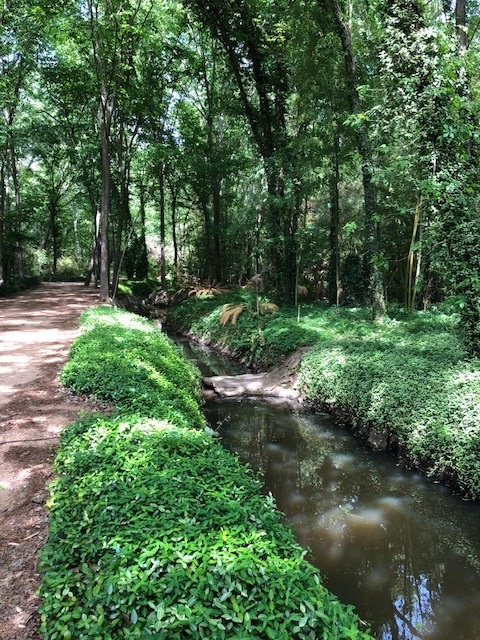
I love trees. I love them. I just got back from a walk, and the photo above is where I walked: a quiet lane completely enfolded in green leaves and branches. The trees whispered in the spring breeze. Like Oliver says, trees save me. Daily. All my life.

I have always loved trees. The first tree with whom I fell in love was a locust that lived in my neighbor’s yard. My seven year old self, a neighborhood pariah, would climb into the tree and nestle in its branches, eating the little brown beans that grew in pods, watching the kids play without me from the safety of my perch.

My ten year old self adopted the tree in our new house, wedged into the V shape that just fit my scrawny behind, Beverly Cleary and Madeleine L’Engle books nourishing my lonely little soul.

Near my house there was an enormous weeping willow, and I would stand in its fronds, imagining that I was in a safe and magical world where no one could find me. I recently visited that street. Both of those precious trees were gone. I grieved.

In the yard in front of the house where my husband and I  spent most of the child-rearing years of our family, there was a giant oak tree whose leaves created a canopy outside my bedroom window. All of every spring and summer, I felt like I slept in a tree house. I kept a chair on the balcony just outside my bedroom, and when my spirit was angry or in despair, I sat in that chair and simply let the tree speak to my soul. I hugged that tree. Literally. I hugged her. And when we left that house, I had to spend time with her, saying goodbye and thanking her for taking such good care of me.

Psalm 52:8 says: “But as for me, I am like a green olive tree in the house of God; I trust in the lovingkindness of God forever and ever.” I think that oak tree in Shenandoah, Texas was a gift from the Divine One, to show Her lovingkindness for my soul.

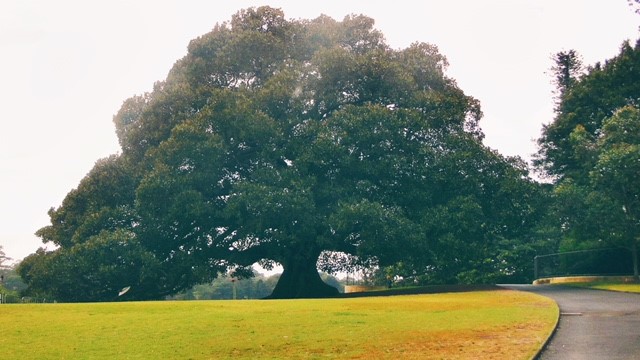
Have you ever seen a giant tree? Maybe a California Redwood? When I visited Sydney Australia with my younger daughter, we found what I think might have been a giant gum tree in the Royal Botanical Gardens. It was stunning. I almost couldn’t walk away. I had to stroke her trunk and talk to her a bit, much to my daughter’s amusement. She’s a bit more pragmatic that her older sister, who balances her chakras and talks to trees like I do.

My daughters, my son, my husband, our parents and grandparents back and back and back have created, as have all families, forests of family trees. Roots go deeper than we can imagine, soaking up nourishment of love like water. Branches reach toward the azure sky and the vibrant sunshine as the seeds of dreams are created and carried. Sometimes there is disease. It might cause a branch to fall, or perhaps even need pruning. That is the great cycle of life that the Divine One has created and set in motion, isn’t it?

What I know today is that my walk amongst the trees fed my spirit, so will the rich poetry of Mary Oliver. Her inner monologues, as revealed in her poetry, just seem to affirm that there are other introverted and tender souls out there who are like me. God has given me my soul, Mary’s poetry, and gorgeous trees to hug. His lovingkindness is everlasting.

Skeletor or Staypuft?

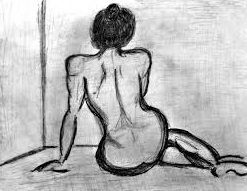
female nude

I find myself in a corner. A prison of my own construction. This morning, I stood at the mirror, examining myself from several angles, bending to and fro to see how my body squidged as I contorted. I ate a very, very tiny breakfast when I got downstairs, let me tell you.

I want to take a moment to talk about weight. I know this is not an original topic, nor will my message be a great revelation. But I am okay with that, because I think we just have to keep talking about this. We have to own what we have done to women in this country, and that takes constant, repetitive chipping away at the wall.

Not too long ago, I went to the preview of a show my husband has been working on, a 1920’s murder mystery at the Prohibition Club in downtown Houston. Prohibition is the home of the Moonlight Dolls, a premiere burlesque troupe. Their photo is below. Look at them. They are all beautiful. And after weeks of rehearsing with them, my husband says they have body image issues, too. What the hell is wrong with us?

Dolls

I knew it was going to be a rough afternoon for me. About ten minutes into dinner, after watching a tiny twenty-something girl in a cute, wee outfit spin on a trapeze, then having four tiny twenty-somethings do the Charleston in g-strings and bandeau tops, I fled to the bathroom, where I sobbed on a toilet for pretty much the remainder of the show.

When I emerged from the stall, I found a large woman bent over the sink, eyes squeezed shut, breathing deeply. She, too, looked traumatized. She finally stood up, squared her shoulders, and went back to her table. I didn’t. I stood in the lobby and read a novel on my Kindle.

There’s a tape that plays in my head, almost constantly. It goes something like this:

“You shouldn’t eat that…suck in your stomach…look how thin that lady is…I bet she has more self control…I bet she is more lovable…how many minutes have I exercised this week so far?” You get the picture. I count calories on an app and worry if I forget to enter something.

When I was a kid, I remember two media moments that embedded themselves profoundly in my psyche. The first was the Special K ad campaign “Can You Pinch an Inch?” The commercials showed people playfully pinching their tummies,and if they had more than an inch of pudge, they needed to go on a diet. For a twelve year old girl approaching puberty, that dangerous message sank its claws deeply. I understood that my body must stay thin to be acceptable. The second media moment came when Cosmopolitan magazine declared that thighs must not touch, and featured an article in which perfectly lovely women who were at healthy weights were shown at a ten pound weight loss, and trumpeted for how much more beautiful they were after that weight loss.

Cosmo

I was not getting affirmation from my family when it came to weight or looks. When I tried to get my mother to tell me if I was pretty, I was told I was shallow and vain for wondering about my looks, when maybe a simple compliment for an insecure girl would have done a world of good. When I was about thirteen, I remember I hugged my maternal grandma and when I told her how much I loved hugging her, her reply was something like, “I’m fat.” I protested, but she told me that my grandfather would love her more if she could just lose twenty pounds. How’s that for a message about weight’s affect on your worth? I believed her, because I had seen that same grandfather stand at the picture window in their lakeside cabin and make fun of his neighbor’s body in her bikini.

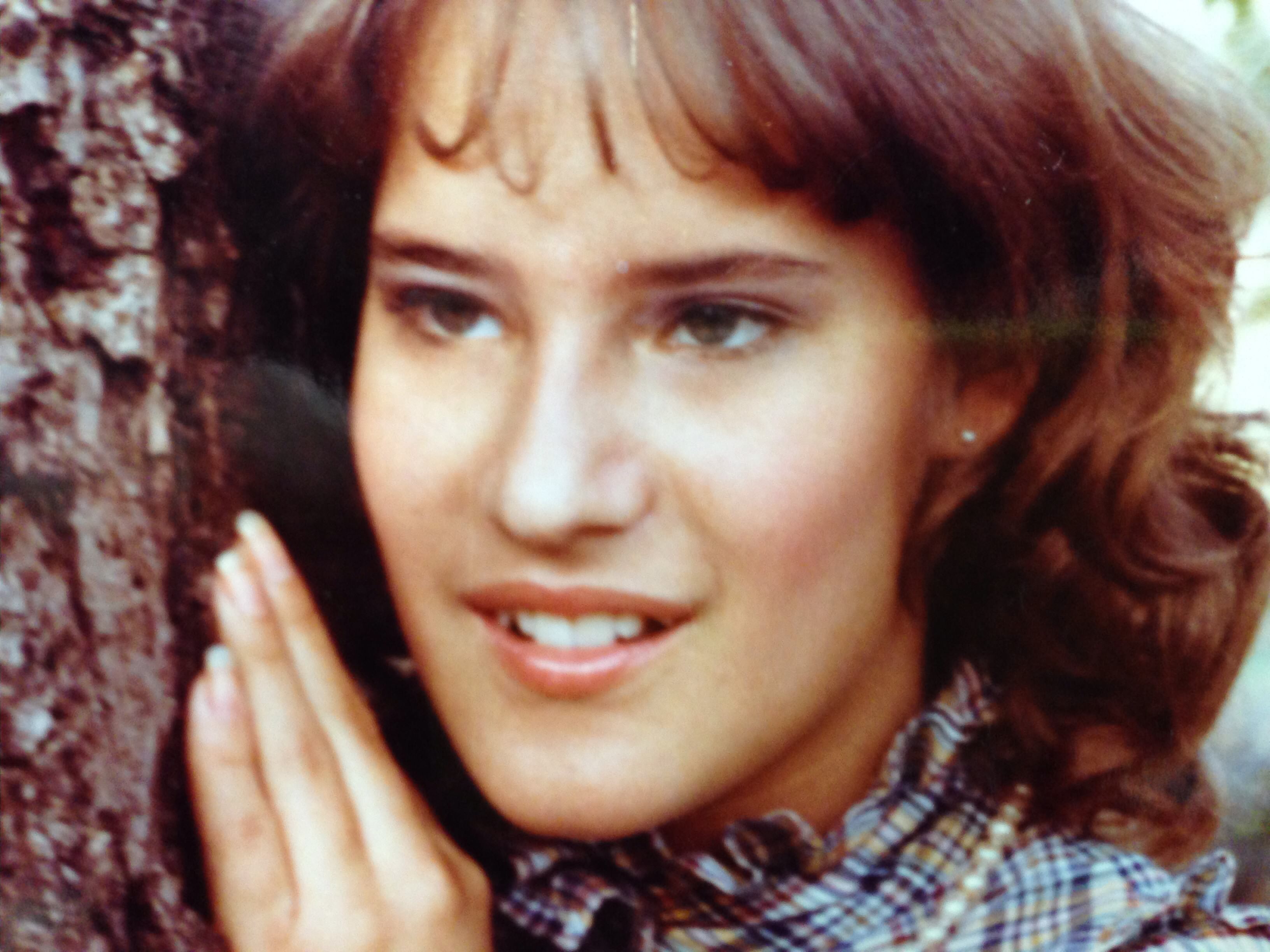
One time, though she didn’t think I could hear, my other grandmother, while looking at pictures I had just had made and was so proud of, commented that I looked like I had put on about ten pounds (I was fifteen and wore a size eight, which would now be a 4. See photo below).

In drill team, we weighed in once weekly, and the officers were allowed to know our weights. I was always on the cusp of being sidelined, at 5’6″ and 128 pounds. In my freshman year of college, the coed p.e. instructor, a man, did a caliper test on all of us, in front of everyone, and declared me “obese” on my form. I weighed 135 pounds and wore a size 8.

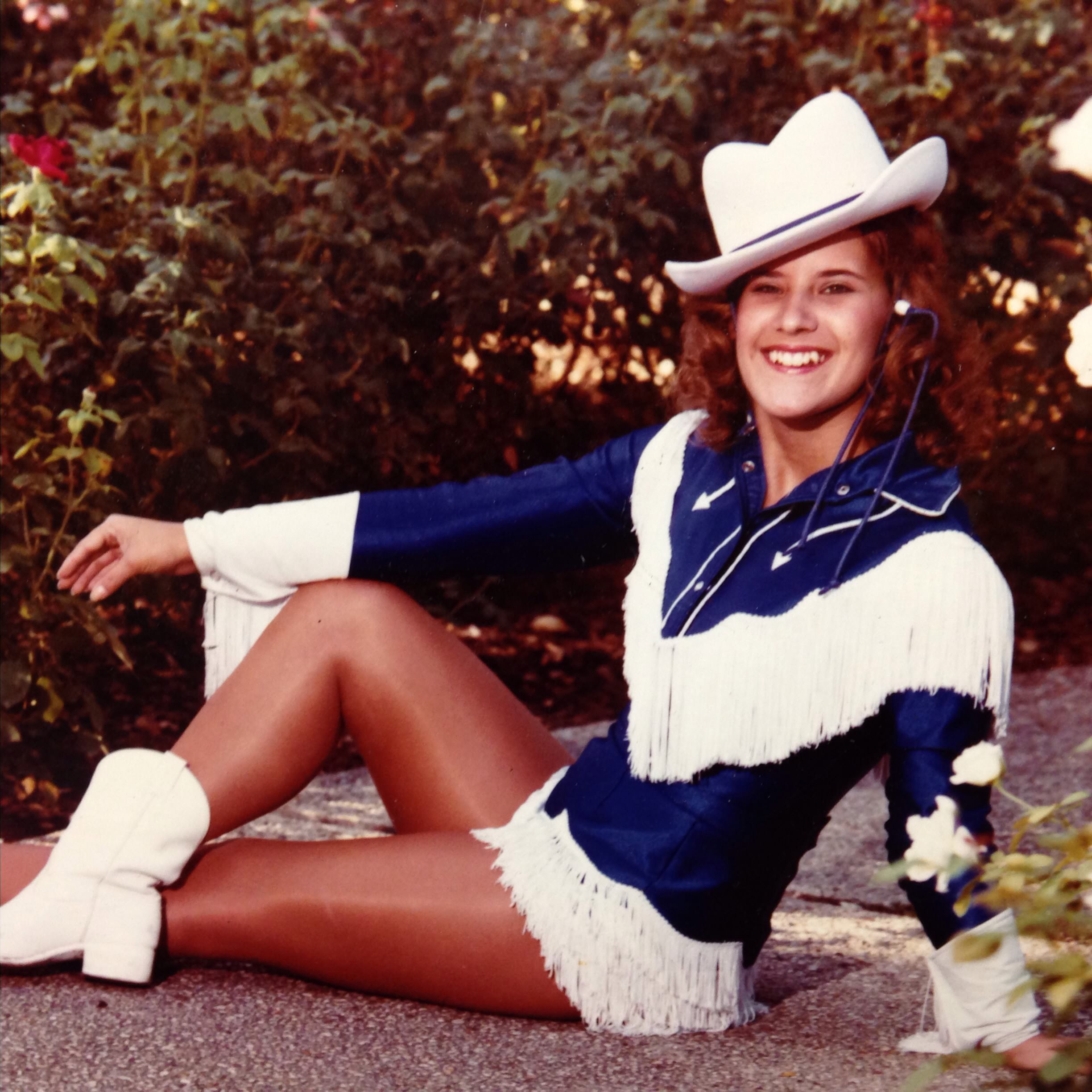
A photo from the shoot when I had gained a few pounds!

You see, I was coming of age in the 1980’s, when Jane Fonda was everywhere and Karen Carpenter was the first celebrity to die of anorexia. Now there are scholarly articles on the prevalence of weight loss articles and images in the media in the ’80’s and what effect it was having on women’s body image. Health was out, thin was in.

(Fittingly, while proofing this post, I heard a commercial for Medifast “Be the best version of you!” on Pandora. It’s everywhere and all the time, I tell you.)

hr-1114-225-649--1114225649005

I have never, ever been able to shake the worry about my weight. I worked as a fitness instructor through my twenties, and spent most of my thirties teaching beginning dance to eighth graders. Now, after one knee surgery, a severely sprained ankle, a bicep tendon injury, and a spinal surgery that removed two cervical discs and replaced them with a steel plate, I still work out as hard as my body will let me. I hurt, but I keep trying, because I want to be thin. I have ten pounds that I keep gaining and losing; it used to be the same ten pounds. I would lose it, it would come back. Something’s changed since menopause, though: I lose ten then gain back twelve. I had been wearing the same size for years, an 8 or ten, depending on fit. Now I am in tens to twelves. Some days I have equanimity about this, but sometimes I lay in bed, squeezing my pudge and mumbling my new dress size over and over, a litany of shame.

I tried my hardest to instill healthy messages to my two daughters about their own bodies. I knew how much I craved doses of reassurance when I was young. I fear my own insecurities rendered me a hypocrite, but I did try. Kate Winslet, an exquisitely beautiful and gifted actress, was recently cited on Huffington Post: “I was chubby, always had big feet, the wrong shoes, bad hair,” Winslet told Bear Grylls during an episode of his NBC show ‘Running Wild With Bear Grylls’ that aired Tuesday. “When I grew up, I never heard positive reinforcement about body image from any female in my life. I only heard negatives. That’s very damaging because then you’re programmed as a young woman to immediately scrutinize yourself and how you look…I stand in front of the mirror and say to Mia [her 14 year old daughter], ‘We are so lucky we have a shape. We’re so lucky we’re curvy. We’re so lucky that we’ve got good bums.’ And she’ll say, ‘Mummy, I know, thank God.’ It’s paying off.”

skeletor stay puft

There has to be a place between Skeletor and Stay-Puft for this woman in her 50’s (child of the 80’s pop culture reference!) If I get too thin, my face looks drawn and skeletal, if I am too heavy, I look puffy and unhealthy. I must find the balance. More importantly, I need to change the tapes that play in my brain. I need to stop looking at myself in the mirror and castigating myself. And though I haven’t carved the word “FAT” into my own thigh with a pair of scissors since 2009, I still recite it to myself in a million ways every day.  It’s time to move forward, to come out of hiding in the bathroom stall, to see myself for what is deeper than cellulite, and to be grateful for my healthy, strong body. Hell yeah, I can pinch an inch. What of it?

Kjerstin Gruys spent a year without mirrors. She researches how body image affects women, and wrote about it. What a gift to the world.

Kjerstin Gruys: A Year Without Mirrors


Pass On The Salt, Please

I loved Sunday School when I was a child. Felt boards with figures of Bible characters were how I remember learning the stories of the good book, watching the sweet grandmotherly women manipulate these flat figures as they narrated the tales of Old Testament and New. And the puppets! Big mouth puppets made of felt with fuzzy acrylic or yarn hair that led us in church songs like “Blue Skies and Rainbows” or “Roll the Gospel Chariot.” I loved Sunday School, I really did. There was a story that always puzzled me, though, and that was the story of Lot’s wife.

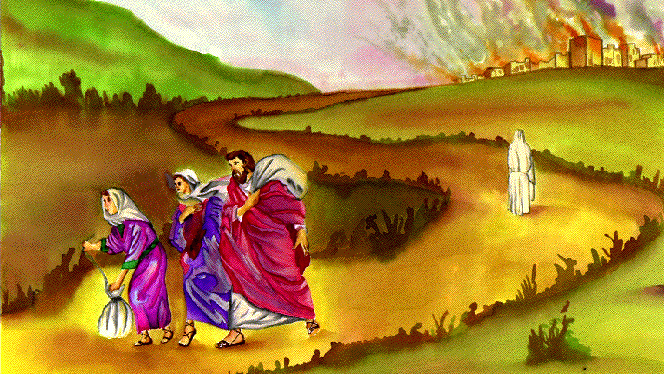
You may not know this one: God has decided to destroy Sodom and Gomorrah because of its evil, and one Godly man remains. Lot and his family have been warned to flee the impending disaster and NOT TO LOOK BACK AS THEY LEAVE.

But Lot’s wife does. And God turns her into a pillar of salt. A freaking pillar of salt! As a child, I just didn’t understand why God would choose such a harsh punishment for simply wanting one last glance back at one’s home. The twin cities were corrupt and toxic, yes, but they were also familiar. They were home. I don’t know that I understood this until recently.

Let me explain:

I recently left my twenty year teaching career. I hadn’t really planned to. I finished my Master’s degree in my field (Theatre), I thought I had turned the corner on what had been an extremely difficult transition with a new principal, I had started the preparations for the coming school year’s production schedule. We had even started making the costumes for the planned fall production: a steampunk version of “The Wizard of Oz.”

Boom! On a Friday afternoon, upon arriving home from a week teaching drama camp, I learned that a position that I had been coveting for three years had magically become available: to be the School Days Coordinator for the Texas Renaissance Festival, the largest renaissance faire in the country, a faire I had worked at for fifteen years as an entertainer.

change 1

I struggled with the decision for about ten days, then took a deep breath and resigned my teaching position. And ever since, I find myself looking back over my shoulder, wondering if I made the right choice, fretting that my replacement would not take good care of my program, at moments desperately missing those great core theatre kids, and sometimes wishing for the chance to direct something.

It’s crippling, really.

In moments of clarity, I remember that I felt like I was slowly suffocating from the workload.

I remember that for every wonderful kid who smiled and tried, there were four who spoke rudely or whose apathy was a line drawn in the ground of the battlefield that is the classroom.

I remember that my administration treated me like a child.

I remember that my voice was ragged, and my own creative endeavors outside of school nonexistent.

It was toxic. Maybe not always, and maybe not for everyone, but for me, my school and career had become a poisoned place.

I think the Divine One knows that to look back can hinder you until you carry that misery forward into the new life He has laid out in front of you. She knows it to the tune of salt. It is as though He refuses to allow you to carry that forward. It will keep those with you from travelling forward as they should. I don’t know why God chose such a drastic means of chastening Lot’s wife, but I am trying to remember that I do not want to become my own living salt statue, inert and crumbling, unable to connect with my husband, kids, or friends.

change 2

I need to let go, and look forward to the blessings that await me on this new path:

Golf cart rides with my husband out on the verdant grounds of the renaissance festival, a renewed singing voice, time to write, respect from my boss, and work that is challenging on a large scale.

Walking away does not make me a loser. Setting down a burden that is smothering is not a failure. Life is not only struggle, it is release.

Note: I was searching through my drafts and found this one. This very week marks one year since I started my new job. My replacement took good, if disorganized, care of my students. I still miss teaching, but I am getting better at looking ahead and dreaming of what possibilities might lie ahead.