
Speak Up: Part Two

September is a great month, isn’t it? The light is just starting to shift from high-octane sun to a softer diffused version of itself, breezes begin to tickle cheeks and make leaves dance. Rain falls and the scorched earth of August relents. The grass is verdant again and shadows lengthen on the pavement ever so slightly. School is back in, students are, for the most part, still excited to be back in the classroom, and teachers have renewed purpose and fresh, unmarked lesson plan books. In our family, we have two birthdays to celebrate, the Astros are still playing, and we are usually preparing to open the Renaissance festival that we’ve worked for twenty years now.

I love September. I have been a teacher/professor for twenty four years now, and I always look forward to the opening of school (which technically happens in late August here, I am taking a wee bit of poetic license- the relevant stuff happens in September, I promise). It was no different in 2011, when I opened a new year with a black eye because I dropped my first gen iPad on my face while checking Facebook before getting out of bed. Those early model tablets are no joke in the weight category! Each class began with excited chatter that quickly silenced when I took to my podium after the tardy bell. My poor new high school students were afraid to ask what had happened, so I began each of six class periods with an introduction and an explanation.
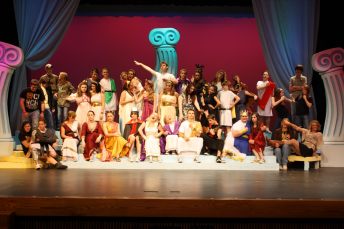
IMG_9669I spent the first week of school swallowing Gabapentin pills (as prescribed) to numb the nerve pain that tingled from the base of my spine to the tips of my fingers and back again, all while learning students’ names, playing warm up games, and preparing young actors and student directors for the fall play auditions. We were putting up the Don Zolidis farce The Greek Mythology Olympiaganza, and some seniors were going to assistant direct the various scenes, to give them a bit of practice applying what they’d learned in three years in my program, but also to give me much-needed assistance since I’d be recovering from spinal surgery.

My assistant principal had endured the same procedure just a couple of years before, she assured me that she was back on her feet and working within a week. I requested the day of my surgery (a Tuesday) and the Wednesday and Thursday off from work to recover, with a plan to return to my classroom on Friday.

On a warm, sunny September first, I walked into the nearby hospital, all prepped for spinal surgery, which went well. My spine was fused, and the extreme, debilitating pain I had been suffering for months was gone.

On an equally sunny day, just two weeks later, my world was rocked by a new doctor’s diagnosis: paralyzed vocal cord.

When I wrote about this a couple of weeks ago, I included just one mention of what I had been since childhood. Just one word. One measly word to tell you, dear reader, who I had always, ever been: a singer.

Not just a sing-in-the-shower singer. A state-level soloist and all district, area, and region choir qualifier in one of the most vocally competitive states in the country. A voice major in the early years of college who switched to elementary music so she could get married and have babies instead of pursuing a grueling performance career. A singer that brought some listeners to tears, others to laughter, and a few to envy.

I sang on stages and in sanctuaries and by cradles.

In recording studios.

On the radio.

I sang. It was the only thing I thought I did well. My only gift.
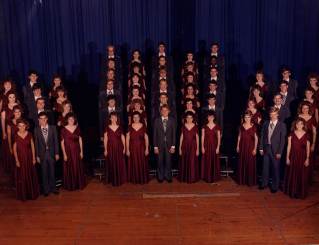
Chorus 1985-1986

I had warned my neurosurgeon that my voice had to be protected when my throat was pushed aside so he could get spinal access, I asked if he could access my cervical vertebrae from the back of my neck instead of the front of my throat. His answer: “No. but in the twenty years I have been doing this surgery, no one’s voice has ever been damaged. Of course, I can’t make you a promise, but the likelihood of your voice being affected in any way is negligible.”

I went for my follow up appointment with my surgeon three weeks after my surgery, when I had already had my throat scoped by an ear, nose, throat specialist. When Doc entered the examining room and cheerily asked how I was feeling, I beckoned him to lean near and whispered, “My voice is gone. The cord is paralyzed.” He went pale, his eyes widened, he was clearly and authentically horrified. All he could say was, “You’re a singer. Oh, no…this has never, ever happened to one of my patients, and it had to be a singer.” He couldn’t say he was sorry, that’s something doctors really can’t do. Apologizing is like admitting guilt, or a mistake, which can become a legal liability. No, he couldn’t apologize with his mouth and his perfectly working voice. But it was in his eyes.

The ENT who had made the initial diagnosis referred me to a specialist in Houston, a physician who has dedicated her practice to saving voices. I made an appointment, my husband drove me as I worried what she would say. I doubted my own ability to remain calm enough to navigate Houston’s infamous high-traffic freeways. It was good he was there, because the news was not good.

Dr. B. sprayed my throat with vile banana-flavored numbing medicine, and ran the camera through my nasal passages, down my throat. I attempted all sorts of vocalizations: vowels, consonants, sung tones; nothing came out. The cord didn’t vibrate even a tiny bit. It was dead. Kaput.

The physician wanted to wait a few months, see if the nerve endings would wake up on their own.

I left the office, bereft, silent tears ran down my cheeks and dripped off my jawline for the hour of the drive out to our suburban home. I climbed into bed, and I despaired. My throat was silent, but my spirit screamed; I was, as Shakespeare described, an empty vessel. Though I made no sound that was audible to the world, my inner world was a cacophony of noise as I railed against fate and wept out all my world-shattering grief.

I wouldn’t speak again for a year.
dandelion 2


Mom of a Different Time

On a Sunday in early May, what I thought was an early birthday brunch ended up being the day I found out I am to be a grandmother.

This is not a title that sits comfortably on me. In fact, I have been dreading it for years, relieved that my older two kids planned to have kids much later if at all, and assuming the youngest would at least wait until she was married and settled.

The Universe has a sense of humor, though. What I have been planning is five years of travel and adventure and completely obligation-free Saturdays, weekends for sleeping in and drinking mimosas. Maybe with my daughter.

Now I am looking at a complete shift in identity. I am now “Grandma.” I utterly and unequivocally refuse that title. Perhaps I will be “Nonny” or “Lolly” or some such thing. But not “Grandma.” I couldn’t bear it.

I have several friends who are already grandmothers. They post sweet photos of squishy little faces, all cuddled up in Grandma’s arms. They have, you know, shirts that say grandma stuff. They swear it’s awesome. The best thing ever. Pure Magic. Which, of course, what I try to live, a purely magical life.

I had grandmothers. I had two completely beautiful grandmothers. You know what they were, though? Old. They were old. To a little girl, they looked ancient. I don’t want to be seen as ancient.

When my daughter and her beloved left our house that spring day, I told my husband as he held me, “I am not ready to be a grandmother.” His reply? “Are you ready to help your daughter be a good mother, though?” Yes. Yes, I am.

And so, after a few days of mulling, I got excited, really excited about the sweet little peanut who will come into our lives soon. I am in love with this baby. I talk to my daughter’s tummy; I stare longingly at other infants, so anxious to hold this one am I; I window shop in baby departments, and I have a countdown to due date app loaded on my iPhone. I felt her flutter, and that was an enchanted moment like nothing I’d ever felt.

Grandmother…and yet, still mother.

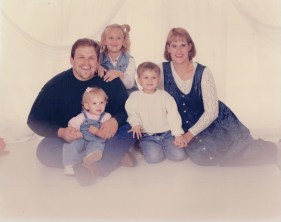
Spring, 1995(2)

Motherhood of young adults who are in their twenties is a whole different level of parenting. Skinned knees give way to broken hearts. Allowance shortfalls are now being unable to quite make rent. Not getting along with an algebra teacher has morphed into coaching an adult child how to deal with an abusive work relationship. Romances have moved beyond the land of “check yes or no if you like me” into the complex realm of co-dependence and infidelity.

Of course, the first step of this change is the college experience. With each child, I worried when we dropped them off at their dorm rooms. With the eldest, our consternation was much about her roommate, a reclusive and unfriendly gamer chick who stayed up late into the night, keeping Hilary awake and groggy. We worried whether she was making friends (she was), partying too much (she wasn’t), and studying enough (she most definitely was). I fretted about bugs in her dorm room and the quality of the food offered on her meal plan. I worried whether she would have the stamina to sustain her choice of major as she worked her way through the grueling audition process that is collegiate theatre. Eventually, she bought a car, changed boyfriends, and started being cast in phenomenal roles that challenged her as both artist and woman.

And yet…she fell deeply in love with a young man who played her romantic love in a play, and we watched as fantasy became reality. Red flags were showing everywhere, and her father saw them almost immediately. It took me a bit longer, though. Our daughter was in love with a drug addict. As a parent, you’re almost helpless. I would say it just  feels like you’re helpless, but it’s actually true. You’re helpless. We pointed out the dangers: disappearing money, stolen debit cards and checks, evictions and creditors, a totaled car, even jail time for theft. Our daughter was so convinced her love would be enough to conquer all. Until the day it wasn’t, and reality hit her like a tsunami.

All you can do, then, is to hold your daughter close when she needs to cry, give her space for quiet when she needs to think, and the sure knowledge that her family is standing by to help her put herself back together.

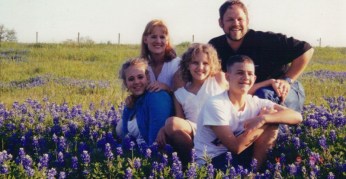
Christmas 1995

The next child falls into a depressed isolation in his dingy dorm room at the east Texas college that no one told you was in financial crisis and would soon be shuttered, and you begin to question where you went wrong as a parent. You’re sure that your childhood role models of family perfection, Greg and Marcia Brady, never struggled like this at college, that they made it to every class with their shiny hair intact and their books perfectly organized. He’s just far enough away that you can’t get to him easily, and when he comes home, he’s hurt and angry, feeling abandoned, when what you were really trying to do, as a parent, was show him your faith in his independence and courage.

That one also dives deep into a couple of troubled relationships, also sure that his love would be enough to conquer all. Again, Tsunami.

Texas 2

And there’s the baby, who, by luck of the draw, ends up in upper classman apartments instead of a freshman dorm, has a near brush with dorm room forced sex, is panicked by the pressure to choose a major, and so flees to Australia to be an au pair in what turns out to be a house run by an unkind mother who refuses to provide her nourishing food, all the while eating her own Hello Fresh food service meals. If you thought your son was too far to reach, your daughter is even farther. She falls in love with a 38 year old man and stays Down Under for two years, then comes home heartsick, a bit bruised in spirit by what turned out to be a pretty controlling bloke.

Then, thank all the heavens and gods and goddesses, she returns to school and meets a good young man, falls in love, gets pregnant, and makes you a Lolly.

It is so, so hard to bite my tongue when I see my young adult children making decisions that might come back to bite them: car purchases, job changes, lovers, debt…

When my kids were little, my husband and I managed their income, their spending, their friendships, their schooling, their hobbies. I don’t mean we dictated, but we drew boundaries: only two after school activities (to prevent exhaustion), sleepovers only where we knew the parents (to prevent abuse), supervised spending (to stave off wastefulness). We worked to lay a foundation of love and confidence.

Now we watch as they test that foundation. They crack it, but it seems to hold. They move forward, sometimes with grace and sometimes with grief, but always forward. Their love is more precious to me now because it’s been tried and tested in the fires of anger and forgiveness, tug and release, and lessons learned. Not just their lessons, but mine, too.

I have learned to have faith in my children.

Now, I too move forward. Can’t wait to meet my sweet granddaughter, Hazel Elizabeth.

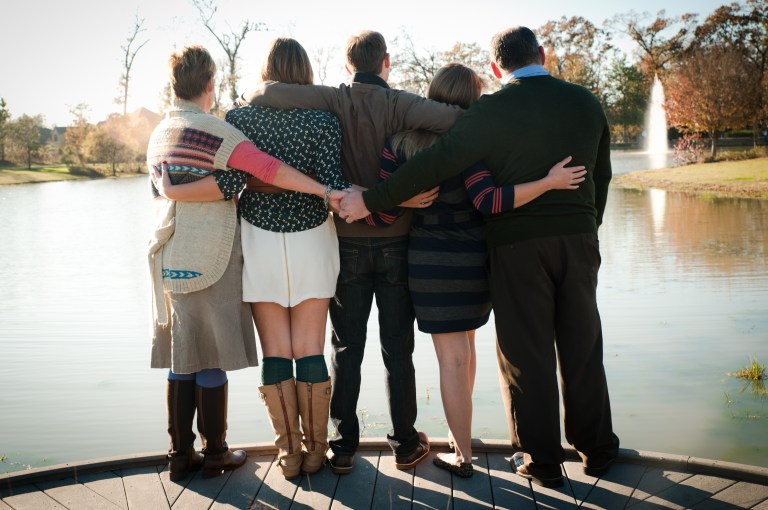
Back of Family

Turning Back

Did you ever pick at scabs when you were a kid? Those big, juicy ones that crusted on your knees and elbows from all the falls you took when on the monkey bars or on your bike? I did. It hurt, it made my scrape open up and bleed some more, but I just couldn’t help reopening the wounds. It didn’t matter if the grown-ups explained that I was going to have scars if I didn’t leave the scabs alone. Potential infection didn’t deter me, I just picked away!

bandaid-heart-As I got older, the wounds became less literal. Not skin and bone- heart and soul. When I was seventeen, I broke up with a boyfriend that I had been dating for over a year. He was a good guy, but timing just was not right: he was in college, I was a senior, yada yada yada. Weird thing, though, I kept driving by his house. I would sit outside, not crying, really, but grieving. Pretty dramatically, I suppose. It felt good to wallow.
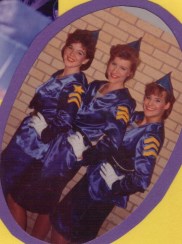
In college, I auditioned over and over to be a hostess for our annual Follies. I never did get to do it. That was tough, because I had to sit in the auditorium for chapel every day, and look at the stage where I felt so defeated.

1988_2Until I decided to stop auditioning for the thing I was never going to get and direct my club’s show, a sentimental journey through the tunes of the Andrews Sisters, which won first place. Then that space, that stage, became a symbol of power (as long as I governed my thoughts). Wounds don’t just come from romance or falls. Sometimes they come from being shut out.


When my husband changed jobs and we moved from Texas to Oklahoma, I used to sit at my picture window, gazing out while wistfully wishing to move back to a town that, if I am honest, I was miserable in. I even envisioned my own woe, creating a mental picture of the melancholy pose I struck as I sighed. I looked, in my own mind, as gorgeous as any Gothic heroine. I should have been dressed in a while linen empire-waisted gown, though in truth, I was probably covered with graham cracker goo and baby spit-up, hair going every which way.

When we left Oklahoma to go back to Texas, after two weeks I called a church deacon and begged, “Please let us come back. Please.” They said no. They said, “Look forward. Not back.” It would be a while before I understood how to do that. And did it. I had to figure it out myself, because I hadn’t really seen it before.

Ten years after her divorce, my mom still sat with her wedding album, flipping through plastic-encased portraits of her happy day, remembering a time when she was joyful, healthy, and surrounded by bridesmaids. Really, her entire adult life was spent, I believe, looking back: wishing to undo mistakes, wishing to be young and happy, wishing to have close friends.

Revisiting sites of injury was a family trait. Sometimes those sites were physical, like boyfriend’s houses, scabs, or stages. Sometimes not, though.  I could not possibly account for the hours I have spent, in my own mind, replaying scenes in which I hurt someone or someone hurt me.

But now I don’t. I just don’t go to places that hurt. I have made the conscious choice to avoid hurting myself. When I reflect on it, I think I made the decision to stop visiting hurtful places around the time I also made the decision to stop cutting myself with scissors.

I was a late comer to the cutting thing. When I was a teen, I didn’t even know that was a thing you could do to alleviate sorrow and anxiety, so I tried the pursuit of perfection and the allowance of boys defining my identity, with a bit of disordered eating thrown in for good measure. In my thirties, though, I found it. Cutting, I mean. Sometimes I escaped to the little office in my theatre classroom to grab scissors from the apple crock in which I still keep pens and pencils, and I would dig deeply into my arm. At home, I might grab a kitchen knife and lock myself into the bathroom, cutting my thighs. It burned. It hurt. And it gave me more scabs to pick at.

I don’t cut myself anymore. I am not ashamed of that chapter, I will talk about it if I am asked. But it’s not my favorite thing to revisit.

049a

There are also places I don’t visit. I have only been to my mother’s grave once, and to my father’s never (beyond the days of their funerals). It is too hard. It opens floodgates of sorrow, sorrow that is close enough to the surface of my heart that tears and heartache don’t need gravestone markers to incite them. For some, visiting those graves is a comfort, and I say, “Go. Please, and tell them I love them while you’re there.”

Churches are a no-go. Way too much hurt inflicted when my husband was in, and then out, of youth ministry. Way too many Sunday mornings when no one said hello. Way too many judgements and proclamations and “encouraging words” masking an assumption about who I am and what I need.

I tried going into the auditorium of the high school where I spent eight years building the theatre program from the ground up, and which I left because of a combative administration. The day I went there, I was laid low, emotionally tender and teary-eyed for days. So I don’t go back in there any more. I know my former students wondered why I didn’t come see their shows, they were so sweet to invite me, but I just couldn’t.

998293_10151606483607711_2070554230_nWe sold the home we spent the bulk of our child-rearing years in, I can’t drive by it, I just can’t. And the house I just sold last year, the one we built from the ground up? No way. When mail was delivered there for a month or so after our move, my husband had to go pick it up.

I don’t visit the local community theatres, not even to see shows. Those are places that have become like great big, giant triggers. Sitting in them feels like little bits of broken glass all over my skin while I am reminded of so many times of being overlooked.

Some places, some people, some memories, just hurt a little too much. Is there beauty in pain? There can be. Is there growth in pain? Often. Is there a benefit, though, in reopening old wounds, wounds that aren’t festering or infected, but are still vulnerable? Not for me. I have had to learn to stop standing at the picture window, sighing and mooning. No more drive-bys to old scenes of hurt.

Like the Fleetwood Mac song says,

“Why not think about times to come?
And not about the things that you’ve done?
If your life was bad to you
Just think what tomorrow will do.”

Everyone’s life has been bad at one point or another. I suppose we all have different ways to heal and protect.

Shielding my quiet soul means choosing where I go. For me, self care doesn’t look like spa facials and chocolate truffles. It looks like a picket fence, covered in flowering vines, protecting me from turning back. It looks like my yoga/meditation room. It looks like my yellow bicycle. It looks like screen shots of texts from my close tribe of trusted friends. It looks like writing a book instead of directing or acting a play script. It looks like my husband and children. It looks like…my life.

dandelion 2